Info:
Duration: 28’ 24”
Year of production: 1970
Music:
Piano Trio No. 5 in D Major, Op. 70 No. 1 "Ghost" by Beethoven:
I. Allegro vivace con brio
II. Largo assai ed espressivo
III. Presto
Performed by:
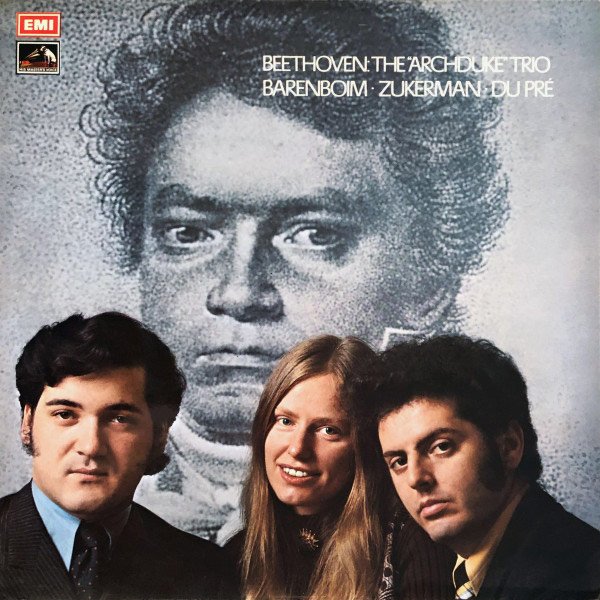
Jacqueline du Pré / Daniel Barenboim / Pinchas Zukerman
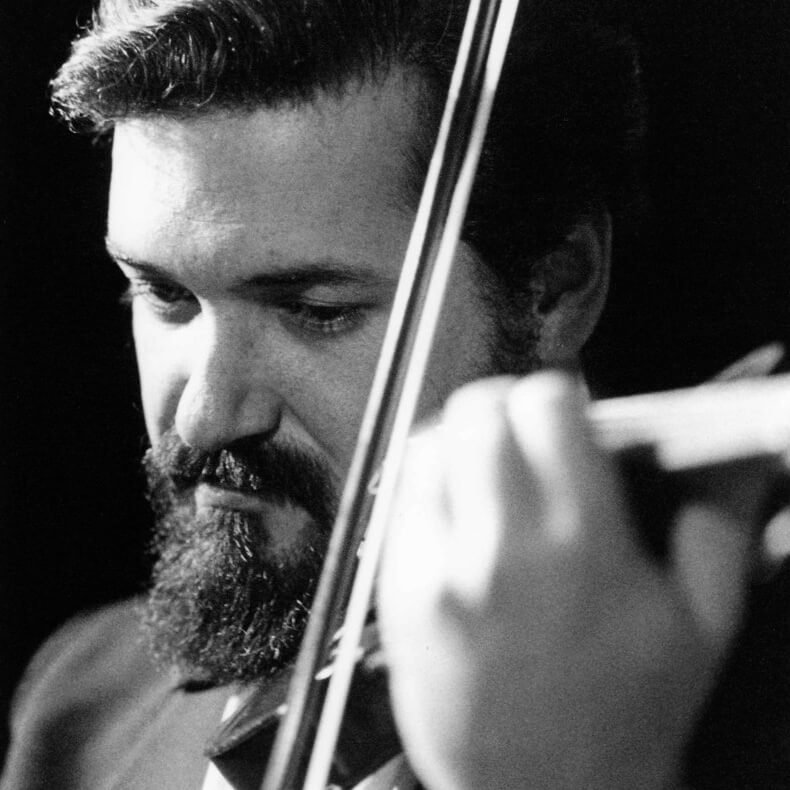
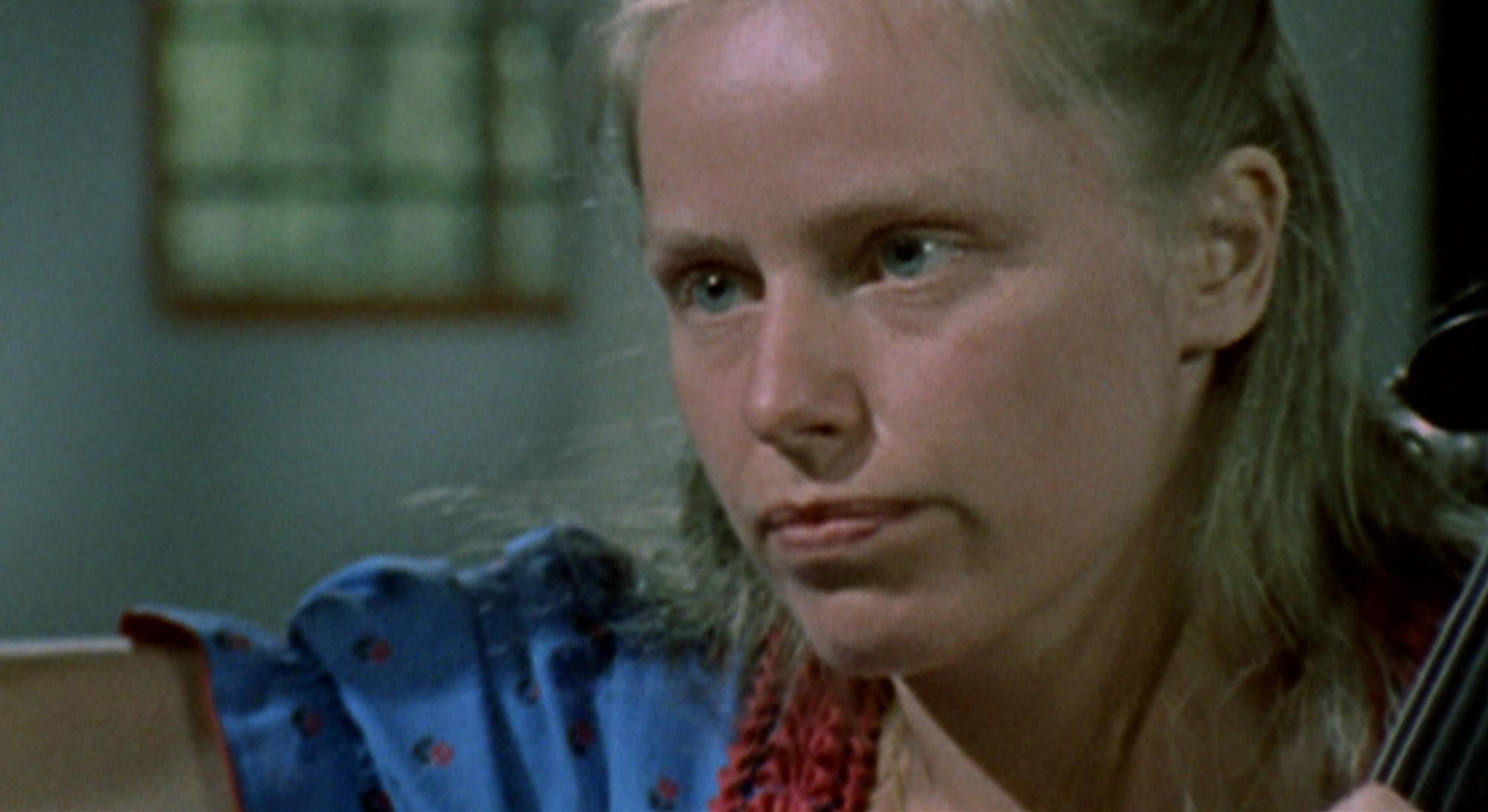
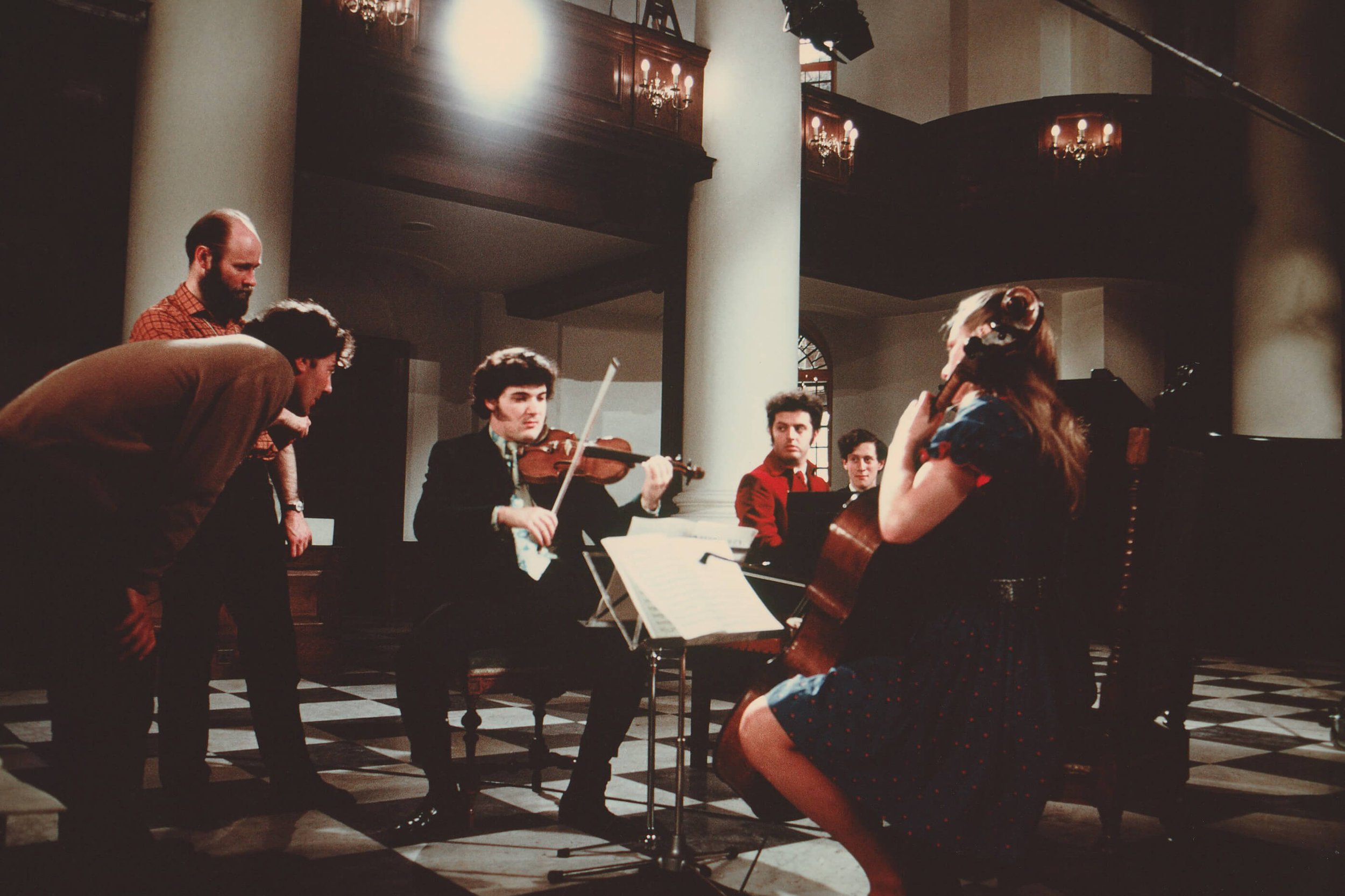
This performance in May 1979, at St John’s Smith Square, was filmed before the onset of Jacqueline du Pré’s illness in the early days of the Barenboim/du Pré/Zukerman Trio, which promised to become one of the great Piano Trios of all time.
They play Beethoven’s Piano Trio Opus 70, No. 1.
In 1808 the composer and violinist Louis Spohr was invited to a rehearsal in Beethoven’s house of the D major Piano Trio Opus 70 No. 1, known as The Ghost, and wrote of the occasion:
“It was not an enjoyable experience. First of all the piano was dreadfully out of tune, which did not trouble Beethoven in the least, since he could not hear it. Little or nothing remained of the brilliant technique which had been so much admired. In loud passages the poor deaf man hammered away at the notes crashing through whole groups of them so that without the score one lost all sense of the melody. I was deeply moved by the tragedy of it all. Beethoven’s almost continual melancholy was no longer a mystery to me.”
This film was described by the French opera and film director Jean Pierre Ponnelle as the most successful translation of musical performance onto the screen that he had ever seen.
Serendipitous History:
-
In fact he did us a favour because without his intervention neither this film of The Ghost Trio or our film Andrés Segovia: The Song of the Guitar would exist.
In the end, Sol Hurok's project never flew and so, six years later, in 1976, we went with Segovia to Granada and filmed him in the Alhambra; a rather better location which, to use his own words, was the Leitmotif of his life and the place where he "Opened his eyes to beauty and was born for the second time - and the most important."
Finding ourselves with a booking at St John's that we could not use, the director Christopher Nupen called Daniel Barenboim and Jacqueline du Pré in Brighton. As he recalls, “I had just heard them play Beethoven's Ghost Trio at concerts in Oxford and Brighton. The Oxford concert, in particular, had left an impression on me that was indescribable, one of those things that music can sometimes do and which cannot be explained; something extraordinarily elevated that I have not forgotten to this day”.
Nupen asked whether they could come to London to play The Ghost for our cameras in St John's Smith Square. They came up on the first train in the morning and went back on the last train that night, but, at the end of it all, we had it captured forever on film.
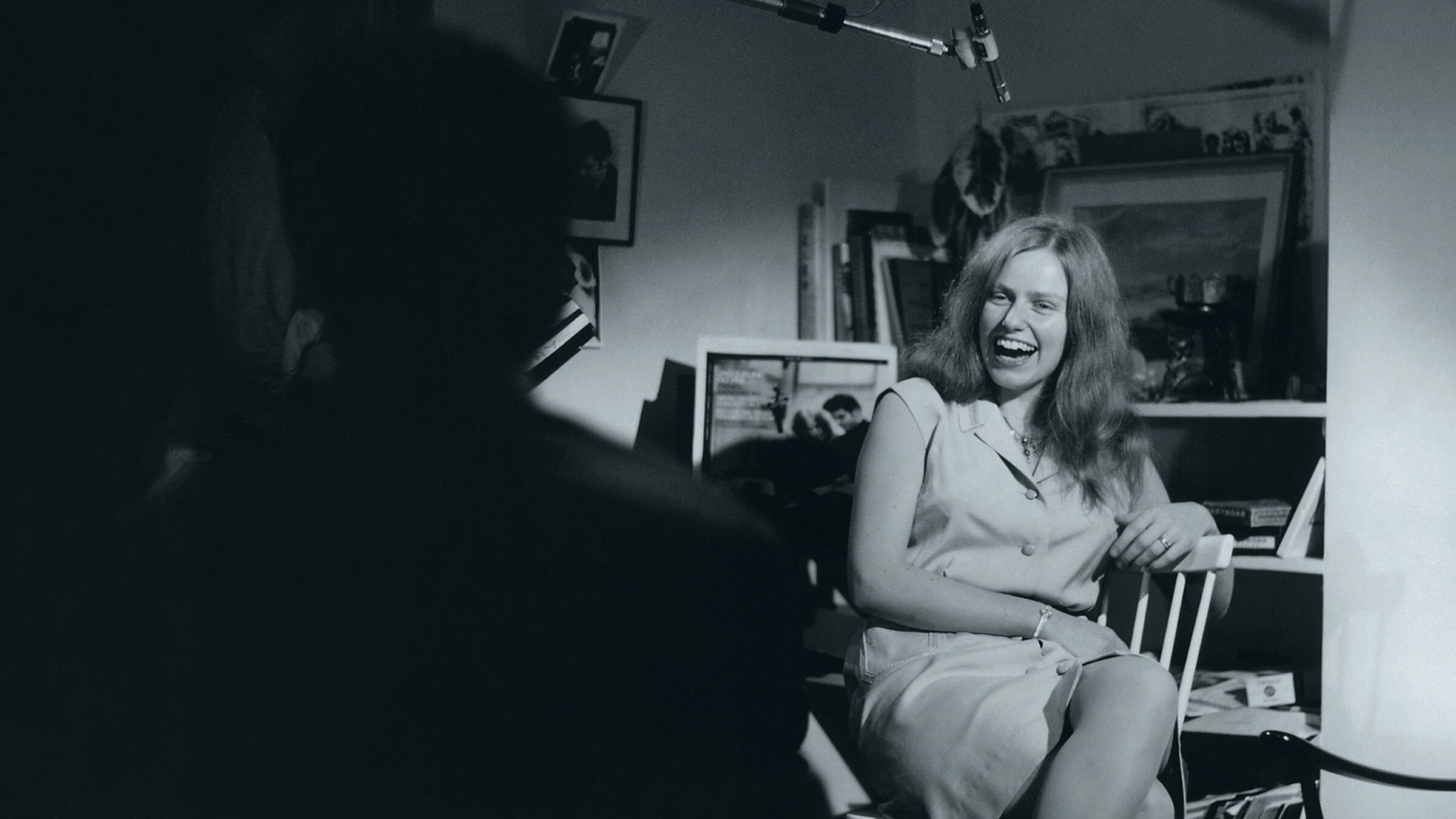
About six weeks later, as soon as we had finished putting the film together, Nupen invited the three of them to see it in a London theatre. At the end of the screening he said that he regretted that film could never capture the extraordinary spirit which they had generated at their concerts in Oxford and Brighton. Jacqueline du Pré responded in a flash, before the others had said a word. "Oh no!", she said. "I don't agree. It is much better on the film".
Everyone was taken aback and Nupen asked why. She replied "Because you can see what's going on and it adds another dimension". We certainly hope that something of the magic that those three marvellous artists created on the stage has, after all, been caught in the camera, remains there for the future, and comes across to the perceptive viewer.

Our Films on DVD

This DVD contains a re-release of two of our most cherished Jacqueline du Pré films. The first is a portrait film which was epoch-making when it premiered; the second is a performance film which was described by the French opera and film director Jean-Pierre Ponelle as the most successful translation of musical performance onto the screen that he had ever seen. Both were pioneering films, made possible by the newly invented lightweight, silent 16mm film cameras.
We were lucky to be there in the right place, at the right time, and with the right relationship with Jacqueline du Pré to preserve something of her magic on film. There is an aura which radiates from the great performers and when it comes to remembering the artistic persona, the camera sees things which the other media do not see and it remembers them with an intimacy which nothing else can equal.
The titles of the two films are Jacqueline du Pré and the Elgar cello Concerto, which contains a complete filmed performance of the work with the new Philharmonia Orchestra, conducted by Daniel Barenboim and The Ghost, which is a filmed performance of Beethoven's piano Trio Opus 70 No. 1 played by Daniel Barenboim, Pinchas Zukerman and Jacqueline du Pré.

There cannot be too many films made of our great performers, provided they are produced with an honest intention and true to the subject. Why? Because film remembers the artistic persona as nothing else can do in quite the same way. This is particularly true in the case of Jacqueline du Pré where so many myths have been invented to explain the unexplainable.
Happily, DVD does not need to explain, it can show the artist just as she was and in a way that was never possible before the invention of the first silent 16mm cameras in the 1960s - just in time for her. First, we present Jacqueline du Pré as seen through the eyes, the ears and the words of the people who knew her best - Who was Jacqueline du Pré? - and second, to present her through her music - Remembering Jacqueline du Pré.
Between those two films the DVD contains a montage of images of Jacqueline du Pré and Daniel Barenboim in action, taken from our archives and accompanied by an audio recording, made by us, of the first movement of the Brahms E minor cello sonata (Interlude with Johannes Brahms) and an interview with Jacqueline du Pré, shot in 1980, which has never been previously released on television, nor on home video.

This DVD contains two of the most famous Schubert films — each entirely different from the other in style, content and spirit.
The first, The Trout, presents a youthful explosion of exuberant talent; starting with Schubert himself — who wrote his Trout Quintet when he was 22 years old. His lead is picked up and brought to life by five extravagantly gifted young musicians when they were barely older than Schubert had been when he wrote the piece. Their names: Daniel Barenboim, Itzhak Perlman, Pinchas Zukerman, Jacqueline du Pré and Zubin Mehta.
The film was shot in a single week in August of 1969 and culminates with a performance of Schubert's Trout Quintet, filmed live on-stage at the new Queen Elizabeth Hall, on the south bank of the Thames, in London.
The second film, The Greatest Love and the Greatest Sorrow, looks at Schubert's astonishing achievements in the last 20 months of his life - after the death of his god, Beethoven. He asked the question, "Who would dare to do anything after Beethoven”? The answer, of course, was Franz Peter Schubert, in the music which he wrote after Beethoven's death.