Info:
Duration: 80’ 32”
Narrated by Christopher Nupen
Year of production: 1994
Contributors include:
Vladimir Ashkenazy - piano
Andreas Schmidt - baritone
Michael Sanderling - cello
Antje Weithaas - violin
The Petersen Quartet
The Bavarian Radio Symphony Orchestra and Chorus, conducted by Wolfgang Sawallisch
Awards:
Winner: Czech Crystal Award, Prague 1994
Nominated: Banff, 1994
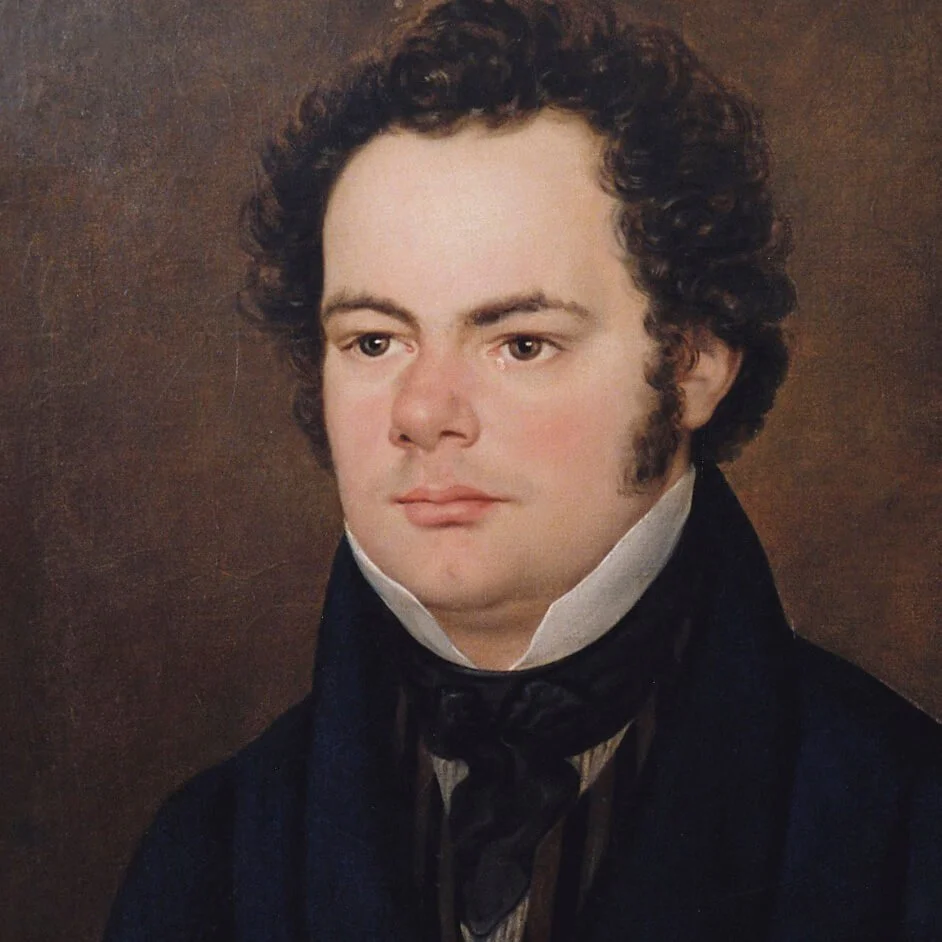
There are thousands, perhaps millions, of people in the world who will say that Schubert is their favourite composer, but if questioned, will not dare to put him on the level of Beethoven or Bach or Mozart. We encountered this dozens of times when making this film.
The reasons are not far to seek. Schubert died young and for all the appreciation of his intimate circle of friends, he was undervalued in his own lifetime and for at least a century more because he failed to achieve public recognition and financial success. He was the first great composer in Western music to live by his art alone, without patronage, and he enjoyed only one public concert of his music in the whole of his life. When he died at the age of thirty-one, his friend Franz Grillparzer, saddened and well-intentioned but misguided, wrote this epitaph, "Music has buried here great riches but far fairer hopes".
Those words remain on Schubert's tombstone and perpetuate an astonishingly durable impression; the myth that Schubert never achieved complete maturity because he died young and that he failed to reach the level of the greatest masters.
Schubert's reputation also suffered from the fact that he did things differently and when a work of art is new and different and the world cannot categorise or label it, it often takes a long time for the public to understand and accept what that work has to offer. In some ways, these things haunt Schubert's reputation even today. To complicate the picture still further, Schubert lived, and in some ways his music continues to live, under the shadow of Beethoven. Schubert himself asked the question "Wer vermag nach Beethoven noch etwas zu machen?" (Who would dare to do anything after Beethoven?). The answer, of course, was Franz Peter Schubert and most notably in the music that he wrote after Beethoven's death.
-
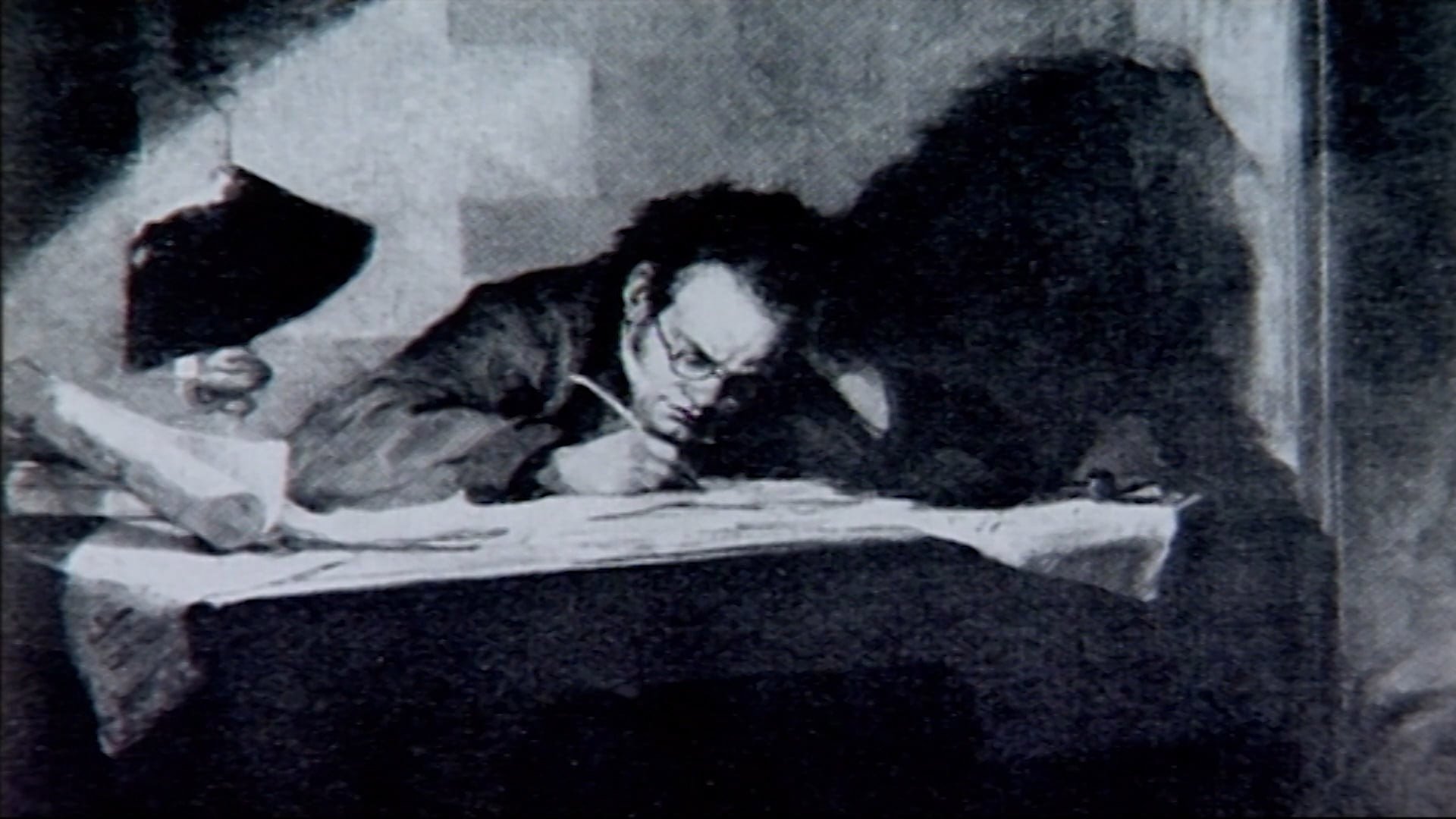
It does not focus on Schubert's life or career, however. Instead, it uses Schubert's words and music to try and help the viewer to feel closer to what the composer himself felt that he was trying to say.
The film begins with the funeral of Beethoven, at which Schubert was a torch-bearer, and the story is told almost entirely using the music that Schubert wrote in the twenty months that remained to him after that date, together with quotations from his letters and diaries and the words that he chose to set in some of his songs.
Our title, The Greatest Love and the Greatest Sorrow, is drawn from a dream which Schubert wrote down on the 3 July, 1822 and which is quoted in full in the film.


This DVD contains two of the most famous Schubert films — each entirely different from the other in style, content and spirit.
The first, The Trout, presents a youthful explosion of exuberant talent; starting with Schubert himself — who wrote his Trout Quintet when he was 22 years old. His lead is picked up and brought to life by five extravagantly gifted young musicians when they were barely older than Schubert had been when he wrote the piece. Their names: Daniel Barenboim, Itzhak Perlman, Pinchas Zukerman, Jacqueline du Pré and Zubin Mehta.
The film was shot in a single week in August of 1969 and culminates with a performance of Schubert's Trout Quintet, filmed live on-stage at the new Queen Elizabeth Hall, on the south bank of the Thames, in London.
The second film, The Greatest Love and the Greatest Sorrow, looks at Schubert's astonishing achievements in the last 20 months of his life - after the death of his god, Beethoven. He asked the question, "Who would dare to do anything after Beethoven”? The answer, of course, was Franz Peter Schubert, in the music which he wrote after Beethoven's death.
Our Films on DVD

A film about the man who made himself the most talked about, the most famous, the most successful, the richest, and the most controversial classical soloist that the world of music has ever known.
The film on this DVD presents Paganini's music, filmed and edited in the style developed by Christopher Nupen and his colleagues for their prize winning DVDs about Sibelius, Schubert and Tchaikovsky and combines it with extracts from Paganini's letters and quotations from both his admirers and his many detractors.
While being hailed as the greatest performing musician of his time, Paganini was denounced again and again by knowledgeable critics as a charlatan in league with the devil and an avaricious man with scant respect for those who responded so enthusiastically to his unforgettable gift - and contributed so readily to his vast personal fortune.
In time this provoked envy and resentment and, finally, a pitiable isolation. By the time of his death, at the age of 57, his unbending quest for gold and for glory had robbed him slowly of almost everything else.
The bonus track is a sequence called Gidon Kremer, Perfectionism and the Thirteenth Caprice from Christopher Nupen's film Gidon Kremer: Man of Many Musics.

This DVD celebrates the musical quest of one of the great symphonists of the twentieth century; Jean Sibelius, as seen through his music, his letters and the words of his wife Aino, who was with him for more than sixty-four years. His quest was not an easy one. Living through the great turning point in Western music, many of his concerns were strikingly similar to those of Schoenberg and Stravinsky but each chose a different path.
Sibelius once said that while his colleagues were serving multicoloured cocktails, he offered only pure spring water. The metaphor is a good one but, as so often with artists who take an untrod path, critical opinion has fluctuated wildly. In 1935 Sibelius was voted the most popular composer of all time by the members of The New York Philharmonic Society, a view that was echoed by many of the leading critics and composers in England.
By the 1950s critical opinion had relegated Sibelius to a position of minor importance.
Views are changing again and the time seemed right for an intimate look at what Sibelius himself felt that he was trying to achieve. The film in two-parts on this DVD is an attempt to do just that.