Info:
Duration: part one 54’ 40”
Duration: part two 59’ 43”
Narration by Christopher Nupen
Year of production: 1993
Awards:
Winner: Diapson d'Or, Paris, 1993
DVD of the Year Award, Midem, Cannes 2008 (Documentary category)
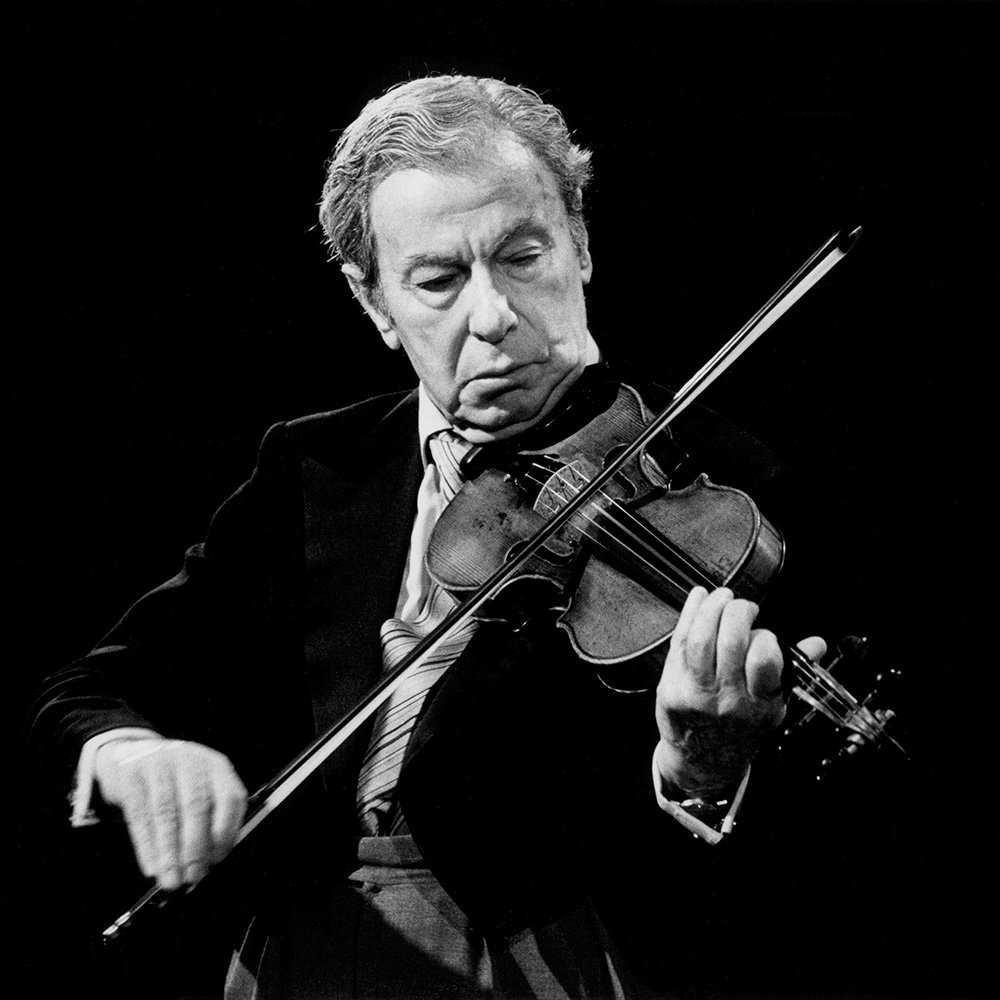
This is a film in two parts with one of the finest performing musicians of the 20th century; an artist whose career spanned 73 years and who won the admiration and respect of virtually every international musician of his time and their genuine affection.
Why master of invention? Because Nathan Mironovich Milstein's ability to invent new ways of doing things on the violin constantly impressed musicians, critics and the public alike throughout his career. At the age of eleven, he astonished Leopold Auer and Jascha Heifetz at his first appearance in Auer's class in St Petersburg; it prompted Auer to ask his pupils, "Well, how do you like that Black Sea technique?" and the rumour went around that Auer was so stunned that he had fainted. Not a bad start.
Less than a year later, he surprised Alexander Glazounov by inventing changes to Glazounov's violin concerto at a rehearsal with the composer himself conducting. Milstein recounts that Glazounov, peering over his moon glasses, enquired, "Don't you like what I did?" The young violinist instantly modified his playing to accord with the score, but after the rehearsal Glazounov generously invited him to play it his own way at the forthcoming concert.
-
To these extraordinary facts I must add another. In sharp contrast to most international performers, Nathan Milstein so studiously avoided publicity throughout his career that he hardly ever appeared on television during all of those 73 years. As Pinchas Zukerman says in the film during the Kennedy Center Honors Awards ceremony, "Everyone in our world treasures him because he refuses to make a fuss. He disdains fanfare and flattery. He is a man neither in need nor in awe of fame".
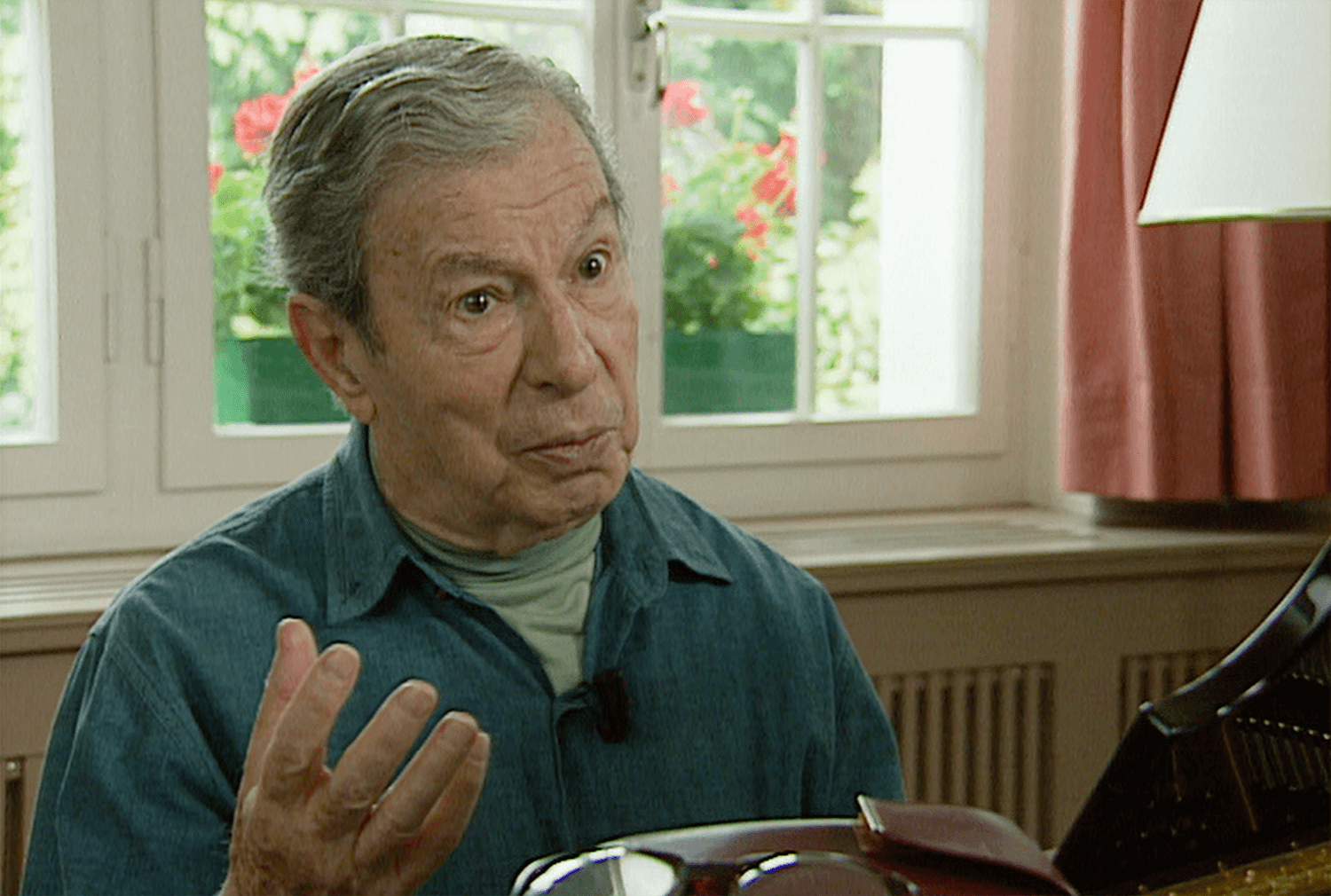
What better scenario for a documentary film? Film can do something to preserve the personalities of our great performers in a way that no other medium can equal. Gramophone records, books and radio may be able to do more for the art itself, but when it comes to remembering our artists, there is something that film can do to preserve the artistic persona that the others cannot match. In this case, the result of our work is a two-part film in which this most professional, most modest and most honest of great musicians talks about his life, his career, his music and his friends; particularly about Auer, Glazounov, Rachmaninov, Horowitz and Piatigorsky. He also talks entertainingly about music to a younger friend and fellow violinist, Pinchas Zukerman.
The films try to capture one of Nathan Milstein's great virtues; the rare human condition of genuine simplicity which goes to the essence of things. In Nathan Milstein's case this quality is also allied to unforgettable talent, breathtaking skill and a true performing spirit.

Our Films on DVD

This DVD portrait celebrates the miraculous gift of one of the finest violinists of the 20th century. Nathan Mironovich Milstein, universally respected by every international musician of his time and genuinely liked by almost all of them. His career spanned 73 years, one of the longest in Western music, and ended with his legendary last recital in Stockholm with Georges Pludermacher.
Nathan Milstein was 82 at the time and still playing as the grandest of Grand Masters and as probably no other violinist has ever played at 82.
The two-hour portrait film is built around that historic event and pays tribute to this ‘quiet magician’ who never sort the limelight and rarely appeared on camera. The DVD also includes both the Kreutzer Sonata and the Bach Chaconne from that same recital which took place on the 17th of July 1986.

This DVD is an intimate account of the formative years in the life and career of one of the leading violinists of our time.
Itzhak Perlman fell in love with the sounds of the violin at the age of 3½ but contracted polio a few months later and was soon to learn that it would be impossible, with his handicap, for him to pursue a high-level career as a violinist.
Not only has he succeeded in doing what the world thought quite impossible but he has done it on a level that few have matched. It is a heartening story of the spectacular triumph of talent, determination, character and tenacity over seemingly insurmountable odds, producing truly glorious results along the way.
The DVD contains the much-admired portrait film Itzhak Perlman: Virtuoso Violinist (I Know I Played Every Note) together with The Trout Remembered, Jacqueline du Pré Remembered (made especially for this DVD) and two complete Bach Partitas, E major and D minor, filmed live at a memorable recital at St John's, Smith Square, in London.

This is a DVD about many things. It is about freedom and captivity, about emancipation, acculturation and assimilation; it is about the roles played by Moses and Felix Mendelssohn in the dream of fruitful, unproblematic integration of the Jews into German society after their liberation from the ghettos; it is about Richard Wagner, his essay Das Judenthum in der Musik (The Jews in Music) and his influence on the thinking of the Third Reich but, most of all, it is a DVD about how much music can mean to people, even in the direst of circumstances, or particularly in the direst circumstances.
The title, We Want the Light, is taken from a poem by a 12-year-old girl, Eva Pickova, written in the Theresienstadt concentration camp. Her words provide both the title and the climax - in a setting for two choruses and orchestra by the American composer Franz Waxman, in his work The Song of Terezin. The DVD also contains music by Mahler, Bach, Schoenberg, Bruch, Schumann, Mendelssohn, Wagner, Schubert, Bloch and Brahms.
With the Gürzenich Orchestra of Cologne, the Cologne Opera Chorus, and the Cologne Cathedral Children's Choir, conducted by Vladimir Ashkenazy.