Info:
Duration: 62’ 41”
Narrated by Christopher Nupen
Year of production: 1985
Award:
Silver Medal (Music) New York International Film and Television Festival 1985
At the close of the 19th century, Vienna presented to the world a picture of ordered elegance and dignified gaiety, but beneath the surface the corruption and hollowness of the late Hapsburg Empire produced widespread and deep-seated confusion and so set the stage for some of the profoundest meditations on the nature of human experience that the 20th century has yet produced.
Vienna was the scene of the intellectual and artistic struggles of many of the seminal minds of our time; among them, Karl Kraus, Robert Musil, Georg Trakl, Otto Wagner and Adolf Loos, Gustav Klimt, Egon Schiele and Oscar Kokoshka, Sigmund Freud, Gustav Mahler, Arnold Schoenberg and Ludwig Wittgenstein.
-
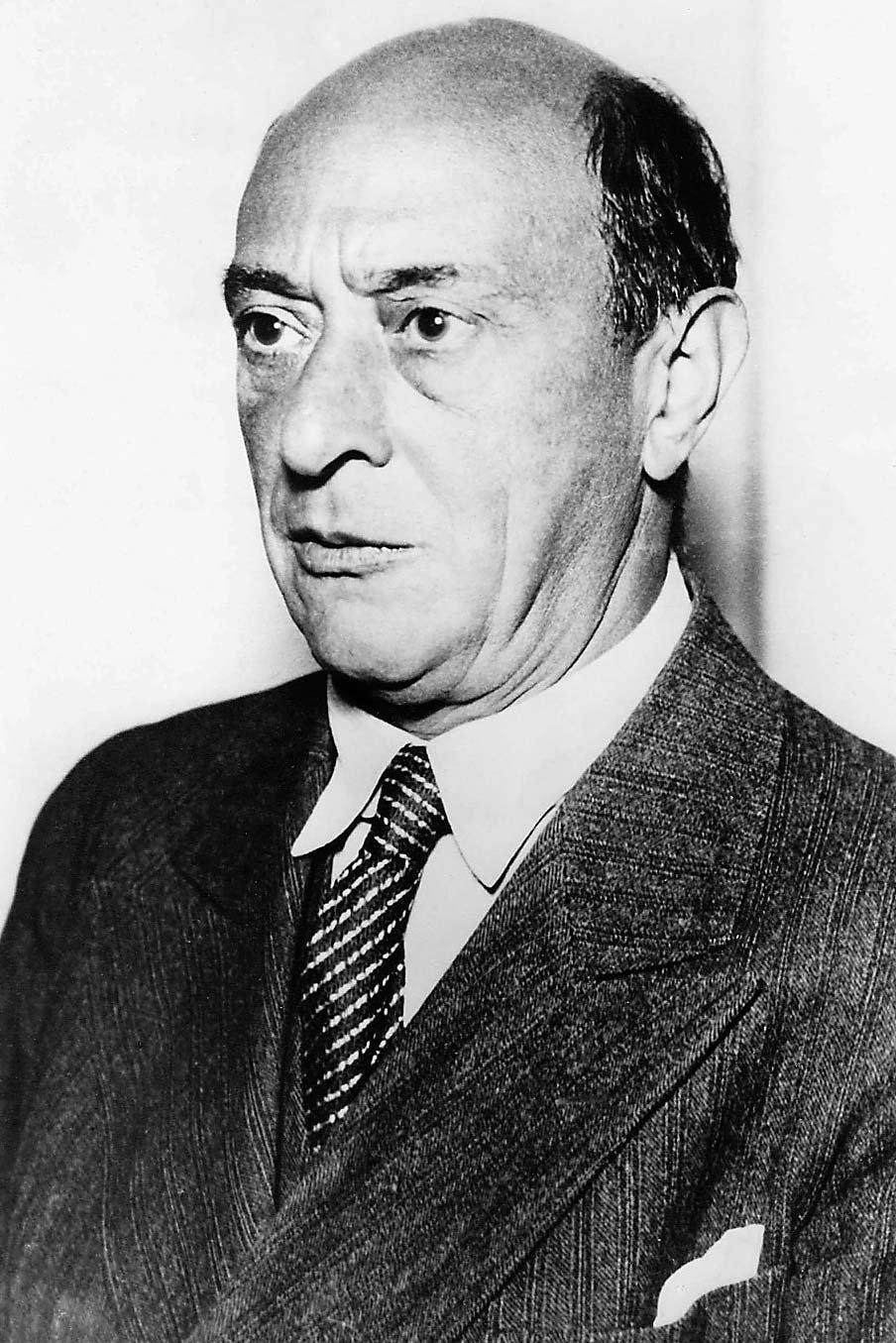
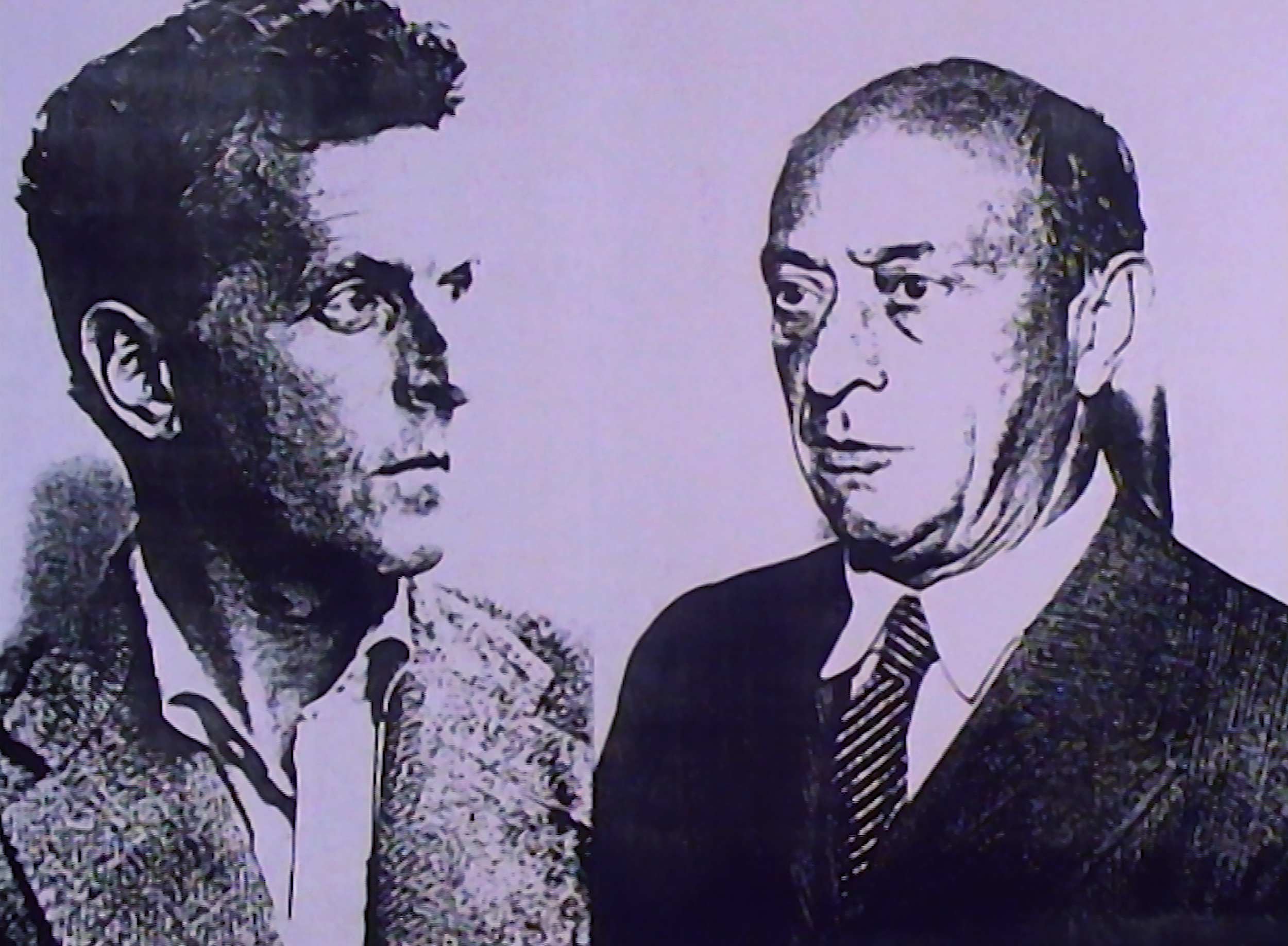
The two men never met, although they were close contemporaries and had common friends in Viennese intellectual society. Why put them together? Because their work springs from the same soil and shares a common ethical purpose; so much so that the development of their ideas runs parallel throughout their lives in an extraordinary and very illuminating way.
As young men both made bold strides into the unknown and with lasting effect: Schoenberg produced the great masterpieces of what has come to be known as his atonal period and set himself on a road that would make him the most influential musician and teacher of our age; Wittgenstein wrote the Tractatus Logico Philosophicus, which is arguably the most influential single philosophical text of the twentieth century. The languages of the new music and the new philosophy reflected a world transformed almost beyond recognition, but, at the same time, they embodied a sharply critical intention and paved the way for a new epoch in European history.
Then, partly as a consequence of the First World War, both found themselves at odds with the spirit of contemporary European civilization and, for a time, both fell silent.
When they started again, both saw themselves struggling with what Wittgenstein called “the darkness of this time” and both directed a new attention to tradition and custom in an attempt to integrate the advances of their early work with the cultural inheritance of the eighteenth and nineteenth centuries. Both then died in exile, Ludwig Wittgenstein in Cambridge and Arnold Schoenberg in Los Angeles and both in the same year - 1951.
They are without question among the principal architects of the imagination of our time and yet both are still widely regarded as difficult or impossible to comprehend. We have tried therefore to make a film not about their lives but about their ideas. Whether that is possible or even a good idea for television is for the audience to judge.
“When people speak of me, they immediately connect me in horror with atonality and with composition with twelve notes. Perhaps they do not sufficiently consider that I am trying to say something which cannot be so easily or immediately grasped.” - Arnold Schoenberg
“Perhaps one day this civilization will produce a culture. When that happens, there will be a real history of the discoveries of the eighteenth, nineteenth and twentieth centuries.” - Ludwig Wittgenstein


Our Films on DVD

This DVD celebrates the musical quest of one of the great symphonists of the twentieth century; Jean Sibelius, as seen through his music, his letters and the words of his wife Aino, who was with him for more than sixty-four years. His quest was not an easy one. Living through the great turning point in Western music, many of his concerns were strikingly similar to those of Schoenberg and Stravinsky but each chose a different path.
Sibelius once said that while his colleagues were serving multicoloured cocktails, he offered only pure spring water. The metaphor is a good one but, as so often with artists who take an untrod path, critical opinion has fluctuated wildly. In 1935 Sibelius was voted the most popular composer of all time by the members of The New York Philharmonic Society, a view that was echoed by many of the leading critics and composers in England.
By the 1950s critical opinion had relegated Sibelius to a position of minor importance.
Views are changing again and the time seemed right for an intimate look at what Sibelius himself felt that he was trying to achieve. The film in two-parts on this DVD is an attempt to do just that.

This DVD presents Vladimir Ashkenazy as pianist, conductor, musical guide and master musician - an intimate and engaging view of one of the world's most quietly successful musicians.
It contains the portrait film Vladimir Ashkenazy: The Vital Juices Are Russian, shot in 1968 when Ashkenazy moved with his wife and son from London to Iceland, an important turning point in his life and career.
Since that film was made, Ashkenazy the pianist (possibly the most frequently recorded pianist in history, his discography runs to 56 pages), has also become an international conductor of the highest rank and we include a montage of sequences from our composer films with Ashkenazy as conductor. It also contains a short interview with Ashkenazy who talks, in his modest but penetrating way, about musical gifts and their origins.
The DVD ends with a film about Rachmaninov's Corelli Variations. In it Ashkenazy discusses the piece at length, with great affection and some telling musical insights. It ends with a complete performance of the piece, filmed at a public concert in Lugano.

The two pioneering films on this DVD do not use actors to represent the composer but are made entirely of Tchaikovsky's own words and music, plus the words of a few of his closest companions. The result gives an exceptionally intimate picture of the inner landscape of Tchaikovsky's work and artistic preoccupations. Scrupulously well researched, the films are a treasure trove for the enquiring Tchaikovsky fan.
The first film, Tchaikovsky's Women (70' 15"), looks at the women both in his private life and in his music. In his early years, almost all of his best work was inspired by a deep identification with the plight of his suffering young heroines, an identification so complete that it spilled over repeatedly into his personal life with dramatic consequences.
The second film, Fate (85' 35"), looks at Tchaikovsky's strange relationship with Nadezhda von Meck which was to become the most important attachment of his life, after his mother. It also follows Tchaikovsky's shift from the fate of his young heroines to his increasing concern with the idea of fate as a controlling influence in his own life and as a motivating force in his later symphonies. The progression is inexorable and nowhere more evident than in the fatal message within the last movement of the sixth symphony, his final and greatest masterpiece.